
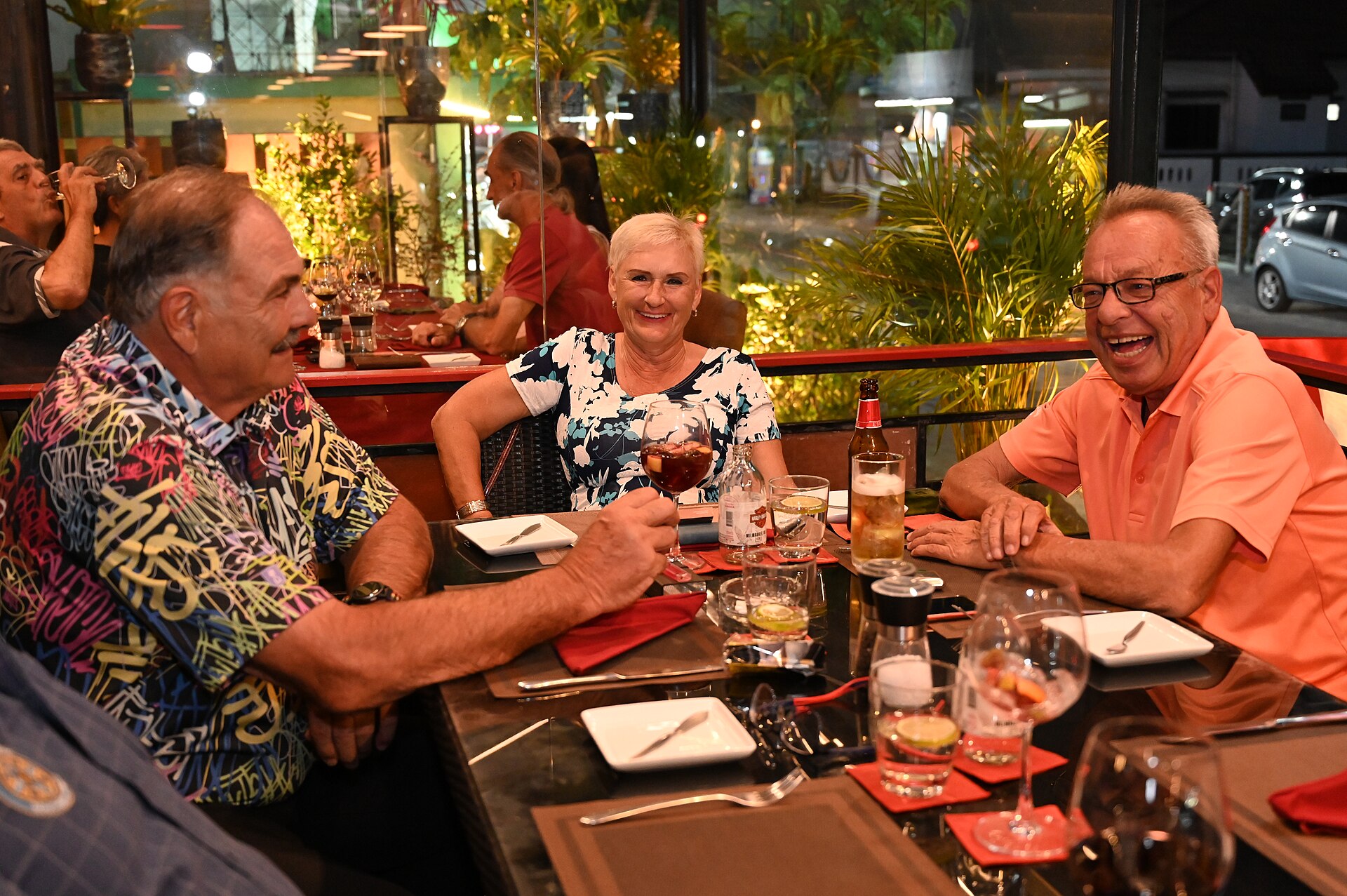
Loneliness has moved from private misfortune to clinical concern: health authorities now rank social isolation alongside familiar risk factors, and doctors in several countries can formally prescribe community activity, a walking group, a men’s shed, a volunteering role, as part of a patient’s care.
Why loneliness is a medical issue
Chronic loneliness correlates with higher risks of heart disease, dementia, depression and early death, with effect sizes that researchers have compared to well-known lifestyle risks. The pathways are plausible and multiple: stress physiology, inflammation, poorer sleep, and the practical absence of anyone noticing when something goes wrong.
The demographics explain the policy attention. Ageing populations, smaller households, dispersed families and the decline of the institutions that once manufactured casual contact, clubs, unions, congregations, have left more people structurally alone even inside crowded cities.
How social prescribing works
In the standard model, a GP identifies loneliness as part of a patient’s presentation and refers them to a link worker, whose job is not treatment but connection: learning what the person might actually enjoy or manage, and walking them to the first session of a group that fits, from gardening to grief support to football for the over-sixties.
The informality is the mechanism. A prescription to attend a community lunch works where advice to be less lonely does not, because it supplies the introduction that isolated people cannot manufacture for themselves.
What the evaluations find
Evidence is accumulating in the pattern typical of complex interventions: participants report improved wellbeing and life satisfaction, GP visits for non-medical distress fall, and some studies find reductions in emergency attendances. Effect sizes are moderate and the research designs imperfect, but the direction is consistent.
Sceptics make fair points: the schemes are hard to standardise, benefits may flow to the already-motivated, and prescribing community to people can sound like the state retreating from services into volunteering. The honest evaluation is that social prescribing is a bridge, valuable precisely where medicine reaches its limit and ordinary life is the treatment.
For more coverage of the stories shaping the day, visit our homepage and the latest reporting in Uncategorized.
The supply side problem
A prescription is only as good as the group it names, and community infrastructure is thinnest exactly where loneliness is densest. Funding follows the referral systems unevenly, leaving link workers in some areas prescribing into a void. The schemes that work invest in the groups themselves, small grants, venues, insurance, as seriously as in the referral machinery.
Volunteers carry much of the system, which raises its own sustainability questions. The best programmes treat volunteers as a workforce to be recruited, trained and thanked systematically, rather than as weather that happens to other people.
Connection as infrastructure
The deeper shift is conceptual: social connection is coming to be treated as infrastructure, like water or transport, whose absence makes people ill and whose presence is a precondition for other policies to work. Urban design, housing layout and transport planning are beginning to be assessed for their connection effects, slowly and against resistance.
For individuals the message is both simpler and harder than any prescription. Relationships are built in repeated, unplanned contact over time, and modern life has optimised much of that repetition away. Rebuilding it, in a street, a workplace, a congregation of any kind, is slow medicine, but it is medicine.
Further reading: World Health Organization and BBC News.
A health system that can prescribe a walking group has admitted something important: that a significant part of health is made between people, not delivered to them. The task now is building enough between-people for the prescriptions to land on.


